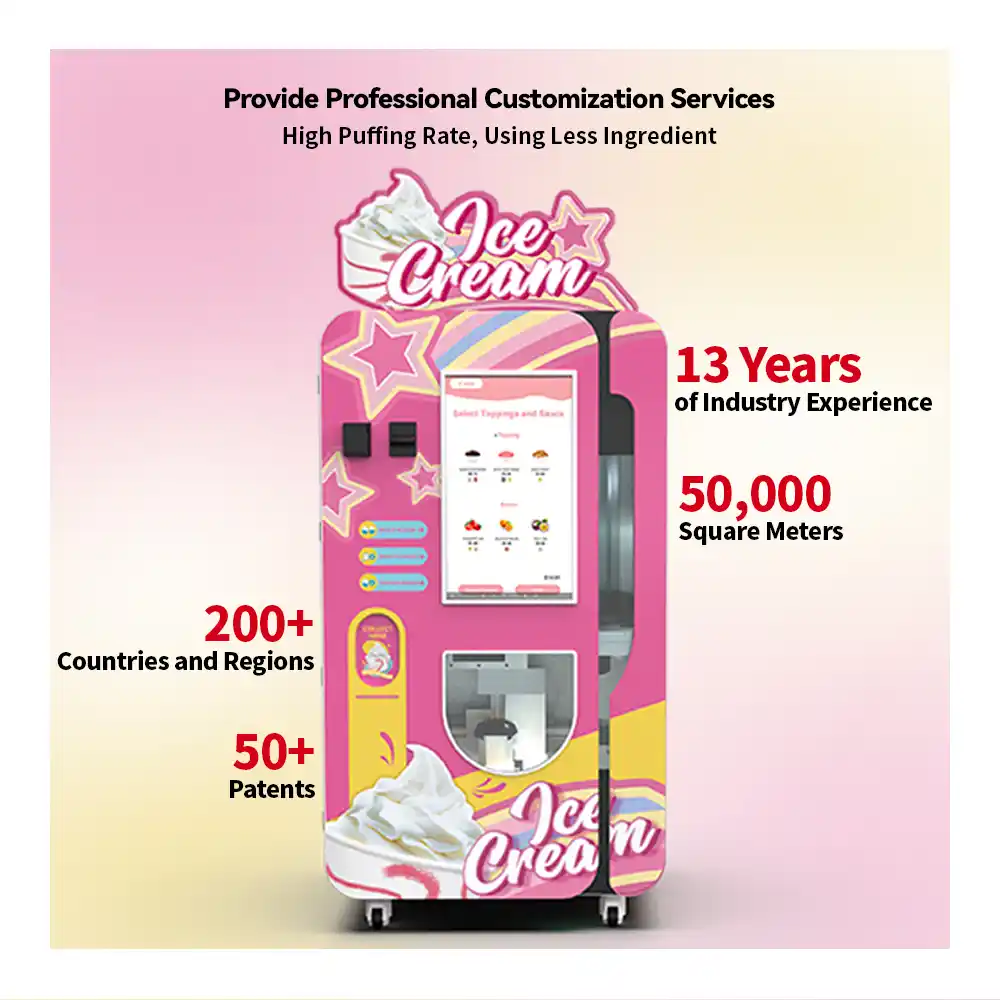
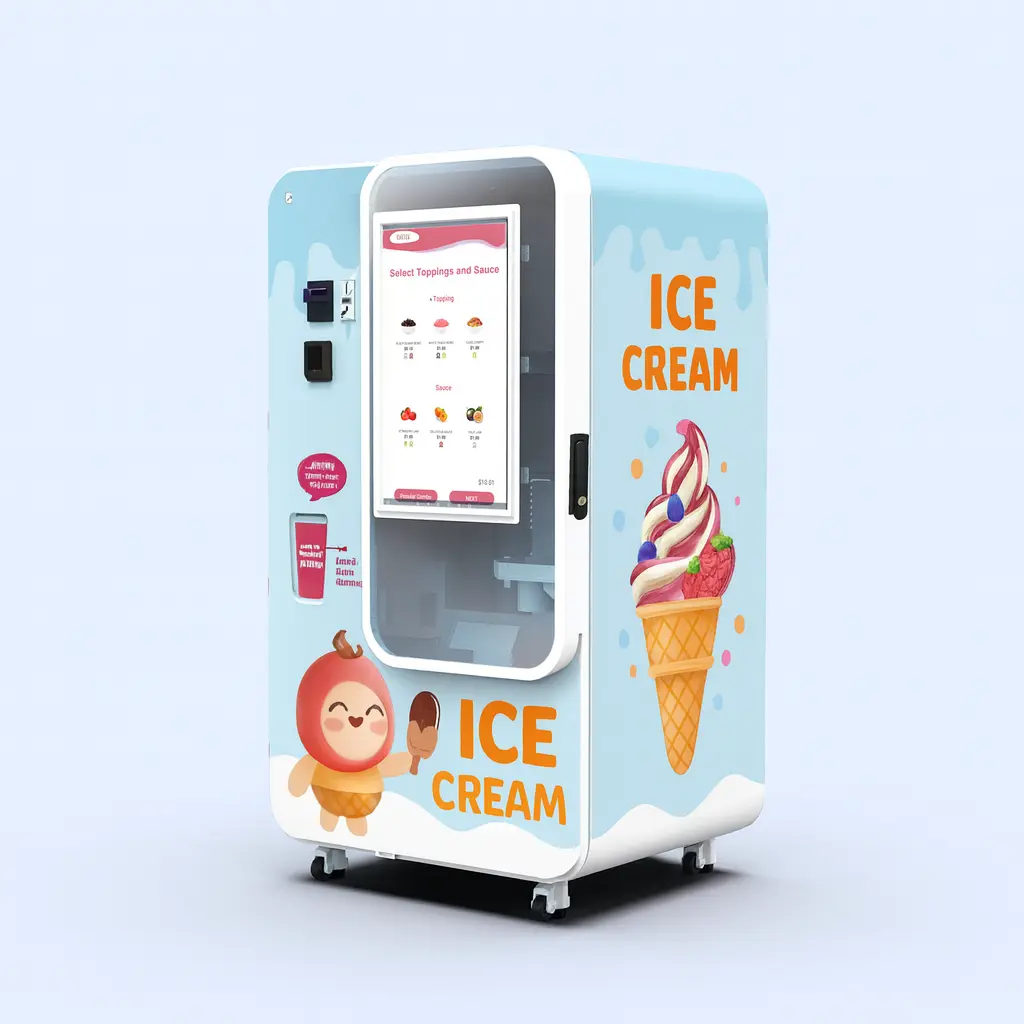
¿Qué es una máquina expendedora automática de helados y cómo funciona realmente?
A diferencia de las máquinas expendedoras tradicionales que venden productos prefabricados, las máquinas expendedoras automáticas de helados completan todo el proceso de producción y dispensación de helados en un entorno cerrado en tiempo real.¿Cuáles son los principios de trabajo, el valor técnico, los escenarios aplicables y la lógica de negocio detrás de este equipo? Basándose en la experiencia real de la industria, este artículo proporciona un análisis detallado de las máquinas expendedoras automáticas de helados, ayudando a los inversores y compradores a comprender por qué estas máquinas han ganado una popularidad sostenida en los mercados europeos, estadounidenses y de Oriente Medio, así como su potencial de ganancias y requisitos operativos.

Para muchos profesionales en las industrias de equipos de venta al por menor y de servicio de alimentos no tripulados, el aumento de las máquinas expendedoras automáticas de helados no es casualidad. Más allá de la tendencia superficial de la automatización, la verdadera fuerza impulsora detrás de su maduración radica en los cambios estructurales más profundos dentro de la industria. Los modelos tradicionales de venta al por menor de helados sufren de altos costes laborales, capacidad de producción inestable y escasa escalabilidad. Por el contrario, las máquinas expendedoras automáticas de helados pueden producir helados completamente desatendidos, lo que demuestra una clara viabilidad comercial. Por lo tanto, la aparición de estas máquinas no es un caso de tecnología en busca de escenarios de aplicación, sino más bien de puntos de dolor de la industria que obligan al desarrollo de soluciones tecnológicas específicas.
¿Por qué era inevitable el advenimiento de las máquinas expendedoras automáticas de helados?
Durante mucho tiempo, la venta al por menor de helados ha sido muy dependiente de la mano de obra. Cada paso, desde la producción, el moldeo y la limpieza hasta las ventas, requiere una contribución humana constante. En mercados como los Estados Unidos y Europa, los costos laborales a menudo representan entre el 30 y el 40% de los gastos operativos totales de una heladería y esta cifra continúa aumentando año tras año.–'— Para agravar el problema, la calidad del helado está sujeta al nivel de habilidad del operador: los productos hechos por diferentes empleados con frecuencia exhiben variaciones notables en el sabor, la relación de desbordamiento y la dureza.' Esto dificulta a las marcas lograr la estandarización y dificulta el ritmo de expansión de la cadena. En tales circunstancias, la sustitución del trabajo manual por equipos automatizados se ha convertido en una evolución natural para la industria.Las máquinas semiautomáticas llenaron un vacío temprano, pero carecen de verdaderas capacidades operativas a gran escala desde un punto de vista comercial. Requieren tareas manuales como el rellenado de ingredientes, el ajuste del desbordamiento, la dispensación de tazas y la limpieza, estas máquinas mantienen una Eficacia General del Equipo (OEE) persistentemente baja, que normalmente oscila entre el 40 y el 55%.– Durante las horas pico con tráfico peatonal moderado, son propensos a desacelerar, congelarse o fallas en la dispensación de tazas. En otras palabras, no pueden manejar el volumen de tráfico típico de los centros comerciales, ni pueden ofrecer rendimientos estables en lugares de alto valor como aeropuertos y lugares escénicos. Lo que la industria necesita no son solo máquinas que hagan helados, sino máquinas que puedan producir helados de manera continua y estable en un entorno desatendido. Esta es la razón principal por la que las máquinas expendedoras de helados totalmente automáticas están en una demanda genuina del mercado.
¿Qué es una máquina expendedora de helados totalmente automática?
Muchas personas que no están familiarizadas con el equipo confunden las máquinas expendedoras automáticas de helados con versiones mejoradas de las máquinas expendedoras tradicionales, pero en esencia, los dos son fundamentalmente diferentes. Las máquinas expendedoras tradicionales están diseñadas para almacenar y dispensar productos preenvasados; la función principal de una máquina expendedora automática de helados, por el contrario, es ejecutar un proceso de producción de grado alimenticio dentro de un gabinete sellado. Maneja los ingredientes crudos en lugar de los productos terminados, lo que requiere un control preciso sobre los rangos de temperatura, las velocidades de mezcla y las relaciones de desbordamiento, al tiempo que completa la dispensación de tazas, la adición de tapas y la entrega del producto final de acuerdo con estrictos estándares de higiene. De hecho, una máquina expendedora automática de helados es menos una pieza de equipo y más una heladería compacta y no tripulada condensada en un espacio de un metro cúbic.Estos equipos deben mantener la seguridad alimentaria sin supervisión humana. Esto significa que no solo conserva las materias primas a temperaturas constantes en el fondo, sino que también automatiza el cambio de temperatura, los ciclos de limpieza y el monitoreo de fallas. Desde la perspectiva de la industria, esto representa una categoría completamente nueva de equipos que integra cuatro funciones clave: producción, control automatizado, ventas y gestión de la seguridad alimentaria.— Esta estructura híbrida es la diferencia fundamental entre las máquinas expendedoras automáticas de helados y las tradicionales.
¿Cómo funciona una máquina expendedora automática de helados?
Comprender el funcionamiento de una máquina expendedora automática de helados no se trata de dominar los detalles mecánicos complejos, sino de comprender por qué puede ofrecer un rendimiento comercial estable y predecible en diversos escenarios. La rentabilidad de los equipos automatizados en última instancia depende de su capacidad para producir consistentemente productos calificados sin intervención humana, una hazaña que se basa en la coordinación perfecta de sus sistemas de refrigeración, mezcla, desbordamiento, recubrimiento y dispensación de tazas.— Sólo cuando estos componentes forman un sistema de circuito cerrado, la máquina puede mantener una dispensación continua durante las horas pico, mantener los estándares de seguridad alimentaria y apoyar un modelo operativo sostenible.El sistema de refrigeración es el fundamento de toda la máquina. El helado no es un alimento congelado, sino un producto que requiere un soporte de enfriamiento dinámico; su formación depende de diferenciales de temperatura precisos entre el cilindro de mezcla y la zona de conformación. Una capacidad de enfriamiento insuficiente o diferenciales de temperatura inestables ralentizarán la formación de helado e interrumpirán la relación de sobrebordamiento. En muchas regiones de Oriente Medio, donde las temperaturas a menudo superan los 100 ° F (38 ° C), solo los sistemas equipados con compresores de alta eficiencia pueden garantizar una producción estable en condiciones tan duras.°°
Para mantener un sabor consistente independientemente de la hora del día, el sistema de mezcla y moldeo de la máquina debe procesar las materias primas de manera fiable.' En pocas palabras, este sistema garantiza que el helado no sea demasiado duro ni demasiado delgado debido a las fluctuaciones de temperatura. Las máquinas maduras pueden mantener un rendimiento estable incluso durante la dispensación continua, garantizando una calidad uniforme del producto para los clientes por la mañana, la tarde o durante las horas pico. Muchos operadores aprendieron una lección costosa desde el principio: mientras que algunas máquinas podían producir helado bajo carga ligera, luchaban con el aumento del tráfico peatonal, lo que llevaba a velocidades de dispensación más lentas, tasas de desbordamiento desequilibradas, calidad del producto comprometida y, en última instancia, pérdidas de ventas.
Los módulos de dispensación de tazas y recubrimiento, aunque aparentemente simples, determinan directamente la eficiencia de la máquina durante los períodos de pico.' La dispensación de tazas desalineadas puede causar atascos, tiempos de inactividad y requisitos de limpieza, todo lo cual reduce directamente el OEE.— El sistema de acabado debe dispensar mermeladas o ingredientes secos con precisión y consistencia; las imprecisiones no solo afectan el sabor sino que también suponen riesgos para la higiene.
Estos detalles son críticos porque en las operaciones desatendidas, cualquier error que podría ser fácilmente corregido por un humano se traduce directamente en costosos tiempos de inactividad del equipo y pérdida de ingresos.
Diferencias fundamentales entre máquinas expendedoras automáticas de helados y máquinas expendedoras tradicionales Si bien pueden parecer similares externamente, su lógica operativa interna es completamente distinta.
Las máquinas expendedoras tradicionales se encargan únicamente de almacenar y dispensar; no tienen requisitos para el control de la zona de temperatura, el mantenimiento de la higiene o la producción continua. El tiempo de inactividad puede perjudicar la rentabilidad, pero no compromete la calidad del producto. Las máquinas expendedoras automáticas de helados, sin embargo, deben realizar tareas de producción sin supervisión. Un cierre no solo detiene las ventas, sino que también corre el riesgo de estropear las materias primas en el cilindro de mezcla. Como tal, son más similares a líneas de producción compactas y no tripuladas que variaciones de máquinas expendedoras de aperitivos o bebidas.Esta distinción significa que los inversores deben adoptar una mentalidad totalmente diferente al evaluar estas máquinas. La evaluación de las máquinas expendedoras tradicionales se centra en los canales de producto, los sistemas de pago y las necesidades de mantenimiento; la evaluación de las máquinas expendedoras automáticas de helados se centra en la capacidad de refrigeración, los sistemas de control electrónico, los mecanismos de seguridad alimentaria y las capacidades de producción continua. Comprender esta diferencia es esencial para tomar decisiones de compra acertadas.
El valor comercial de la automatización En última instancia, el valor de cualquier tecnología radica en sus rendimientos comerciales.
La rápida expansión de las máquinas expendedoras automáticas de helados en los mercados europeos, estadounidenses y de Oriente Medio se deriva de tres ventajas clave: mayores ventas por unidad de área, menores costos laborales y una escalabilidad superior. Una máquina madura puede producir una sola porción de helado en tan solo 15 - 20 segundos, manteniendo velocidades de dispensación consistentes incluso durante los picos de demanda.– Para los espacios comerciales, esta producción estable se traduce en una mejor eficiencia de utilización del espacio; para los operadores, significa completar más transacciones sin aumentar la mano de obra.La automatización también permite la operación y mantenimiento remotos. Los operadores pueden monitorear la temperatura de la máquina, el inventario de ingredientes, el rendimiento del motor, los códigos de error y los datos de ventas en tiempo real a través de un sistema de backend, y realizar ajustes remotos cuando sea necesario. Nuestros proyectos en los EE.UU. y Europa demuestran que un solo operario capacitado puede manejar 10 - 20 máquinas, eliminando la necesidad de trabajadores por turnos requeridos por las tiendas tradicionales de ladrillo y mortero.–— Esta estructura de mano de obra es el principal motor detrás del impresionante retorno de la inversión (ROI) del equipo.'
La producción transparente es otra ventaja inherente a las máquinas automatizadas. En centros comerciales y aeropuertos, los consumidores son muy sensibles a la higiene de los alimentos, y la capacidad de ver el proceso de fabricación de helados aumenta significativamente la confianza. Hemos observado un patrón consistente entre nuestros clientes alemanes: si un consumidor se detiene a ver el proceso de producción durante más de seis segundos, su probabilidad de realizar una compra aumenta notablemente. Esto demuestra que la producción transparente no es solo una mejora de la experiencia del cliente, sino que es un poderoso impulsor de las tasas de conversión.—
Escenarios comerciales óptimos para máquinas expendedoras automáticas de helados Las máquinas expendedoras automáticas de helados no son adecuadas para todos los lugares, pero sobresalen en escenarios específicos de alto potencial.
Los centros comerciales son uno de los casos de uso más comunes. Los consumidores pasan largos períodos en los centros comerciales y están dispuestos a probar productos experimentales; además, la temperatura ambiente estable en los centros comerciales proporciona un entorno ideal para mantener un rendimiento consistente de la máquina. En tales entornos, las ventas diarias de 120 180 porciones son comunes.–
Los aeropuertos son otra ubicación principal. El servicio sin contacto, la higiene, la velocidad y la producción transparente se alinean perfectamente con las preferencias de los viajeros aéreos, que a menudo tienen tiempos de espera más largos en las áreas de terminales. Hemos observado que las ubicaciones de los aeropuertos pueden tener precios más altos que los centros comerciales, ya que los viajeros están dispuestos a pagar una prima por la comodidad y la experiencia.
Los lugares escénicos son impulsados por el consumo emocional y las condiciones climáticas. Los turistas son menos sensibles al precio, y el helado se convierte en un producto de gran demanda durante los meses de verano. Mientras tanto, el proceso de producción transparente es altamente fotogénico, generando tráfico orgánico de boca en boca y peatones.
Para ilustrarlo con un ejemplo del mundo real: una máquina instalada en un centro comercial de tamaño mediano de los Estados Unidos logra un volumen promedio de ventas diarias de aproximadamente 150 porciones, con un precio de entre $3 y $3.50 cada una.– Después de deducir los costos de materias primas, electricidad, consumibles y tarifas del lugar, el beneficio bruto mensual oscila entre $5,000 a $6,400, con un período de amortización de solo 3 meses.–– La clave de este éxito no fue el exceso de tráfico peatonal, sino la capacidad de la máquina de mantener una alta eficiencia en el entorno del sitio operando de manera confiable en modo nocturno, ofreciendo ratios de desbordamiento consistentes y experimentando un tiempo de inactividad mínimo debido a las fluctuaciones de temperatura.'— Un rendimiento estable se traduce en rendimientos estables, que es el valor comercial más tangible del equipo.'
Una máquina expendedora automática de helados es un sistema de producción de grado alimenticio capaz de un funcionamiento estable y desatendido. Su valor se deriva del control dinámico de su sistema de refrigeración, la continuidad de sus sistemas de mezcla y desbordamiento, y la fiabilidad de sus módulos de dispensación y recubrimiento de tazas. Estas características tecnológicas permiten a la máquina entregar productos consistentes y de alta calidad de manera eficiente en escenarios comerciales del mundo real. Para los inversores y compradores, comprender la lógica detrás de esta tecnología es crucial para evaluar la madurez del equipo, la rentabilidad a largo plazo y la idoneidad para el despliegue a gran escala. A medida que el comercio minorista no tripulado continúa evolucionando, las máquinas expendedoras de helados totalmente automáticas están a punto de convertirse en un elemento básico en los espacios comerciales de todo el mundo y dominar sus principios operativos será una competencia clave para futuras decisiones de inversión y adquisición.—