首页 > Blog ¿Las máquinas expendedoras serán rentables en 2025? Análisis práctico del ROI de las máquinas expendedoras de helados
¿Las máquinas expendedoras serán rentables en 2025? Análisis práctico del ROI de las máquinas expendedoras de helados
Date:2025-12-24 08:17:44 Author:Huaxin
¿Las máquinas expendedoras hacen dinero? Esta pregunta se busca con frecuencia en 2025, pero la verdadera respuesta nunca ha sido un simple sí o no. La rentabilidad depende del tipo de máquina expendedora, la estructura de costos, la estrategia de ubicación y la complejidad operativa. En este artículo, tomamos las máquinas expendedoras de helados como un caso central para desglosar sus costos reales, el modelo de ingresos por unidad y las variables clave que afectan a la rentabilidad También hacemos comparaciones con el negocio tradicional de máquinas expendedoras, ayudando a los inversores a determinar si las máquinas expendedoras de helados seguirán siendo una empresa viable para ingresar en 2026.

Cada año, un gran número de nuevos inversores ingresan a la industria de las máquinas expendedoras, y si puede ganar dinero es casi la primera pregunta que hacen."" Para 2025, esta pregunta se ha vuelto más compleja. Por un lado, la aceptación del comercio minorista no tripulado continúa aumentando, y los hábitos de pago y los equipos automatizados son mucho más maduros de lo que eran hace unos años. Por otro lado, los precios de los equipos, la competencia por la ubicación y los costos de mantenimiento también aumentan simultáneamente. Especialmente en el nicho de helados, muchas personas se sienten atraídas por palabras clave como alto precio unitario, automatización y operación no tripulada, sin embargo, encuentran que cuando realmente calculan el retorno de la inversión, el resultado depende mucho más de los detalles de lo imaginado.""""""
Si sólo preguntamos si las máquinas expendedoras ganan dinero, la respuesta está destinada a ser vaga."" La pregunta verdaderamente significativa es: ¿qué tipo de máquina expendedora, bajo qué condiciones, seguirá teniendo una rentabilidad estable en 2026? Las máquinas expendedoras de helados son una historia de éxito muy representativa en este sentido.
¿Las máquinas expendedoras serán rentables en 2025?
Desde una perspectiva general de la industria, la industria de máquinas expendedoras no está en declive en 2025, pero ha sufrido claramente una segmentación. Las máquinas expendedoras tradicionales de aperitivos y bebidas todavía existen, pero sus márgenes de beneficio se están exprimiendo. Las razones son sencillas: homogeneidad severa del producto, precios unitarios bajos, feroz competencia por ubicación y bajas tasas de conversión de consumidores. En este contexto, las máquinas expendedoras que se basan únicamente en el volumen de ventas para obtener ganancias ya no pueden lograr la fácil rentabilidad de la que disfrutaron en los primeros días.Al mismo tiempo, otra categoría de máquinas expendedoras está demostrando una mayor rentabilidad aquellos con capacidades de producción in situ.— Las máquinas expendedoras de helados entran en esta categoría. Su principal ventaja no radica en la automatización en sí, sino en la producción y ventas in situ. Esto transforma directamente la estructura de los ingresos, haciendo que la discusión de su rentabilidad siga siendo relevante en 2026.
Por lo tanto, cuando discutimos si las máquinas expendedoras son rentables, la verdadera pregunta ya no es si operan sin intervención humana, sino si tienen capacidades de producción in situ y si estas capacidades se pueden convertir en mayores márgenes de beneficio por unidad y rendimientos estables.
Por qué las máquinas expendedoras de helados no son un negocio de bajo costo Muchas personas nuevas en las máquinas expendedoras de helados tienden a subestimar la estructura de costos.""
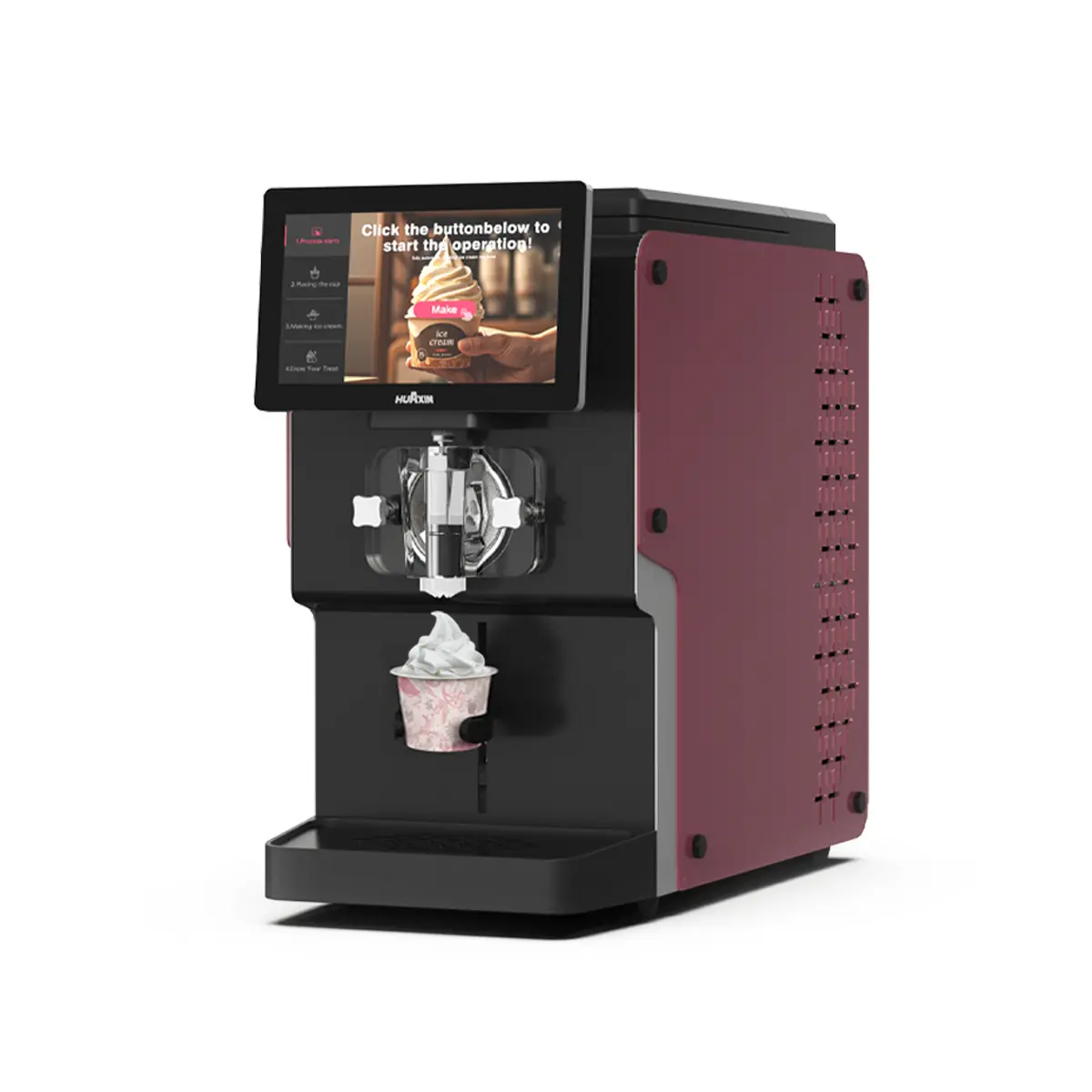
Se centran en el aspecto no tripulado y en el hecho de que no es necesario contratar empleados, pero pasan por alto que el equipo automatizado en sí mismo asume más roles."""" Desde una perspectiva de costo, las máquinas expendedoras de helados no son un proyecto de umbral bajo, sino un modelo con una inversión inicial concentrada y operaciones posteriores relativamente estables.En primer lugar, el costo del equipo. En comparación con las máquinas expendedoras tradicionales de aperitivos o bebidas, las máquinas expendedoras de helados requieren refrigeración, mezcla, desbordamiento, control electrónico y sistemas de limpieza automática, por lo que los precios de sus equipos son significativamente más altos. Este es un gasto de capital típico que determina el período mínimo de retorno. En el mercado principal en 2025, el costo de una sola máquina expendedora de helados con capacidades de operación comercial estable generalmente representa la mayor proporción de la inversión total.
El segundo es el costo de la materia prima. Las máquinas expendedoras de helados utilizan bases de leche líquida, mermeladas, coberturas secas y otras materias primas en lugar de productos terminados. El costo unitario por porción de estas materias primas es relativamente controlable, generalmente mucho menor que el precio de venta terminal. Sin embargo, también imponen mayores requisitos para el control de temperatura, la preservación y la limpieza. Por eso no se pueden ignorar los costos de mantenimiento.
El siguiente es el costo de ubicación. Ya sea en centros comerciales, aeropuertos o lugares escénicos, los operadores de lugares suelen participar en la distribución de ingresos en forma de alquiler o recortes de ganancias. Esta parte del costo varía significativamente según la región y es uno de los factores más inestables que afectan a la rentabilidad.
Por último, los costes de mantenimiento y operación. Aunque el equipo funciona sin tripulación, no es de cero mantenimiento."" La limpieza regular, el reemplazo de consumibles, el monitoreo remoto y las reparaciones ocasionales resultan en gastos continuos. La diferencia es que esta parte del costo suele ser predecible y escalable, en lugar de aumentar linealmente como los costos laborales.
Modelo de ingresos de máquinas expendedoras de helado
Para que el modelo de ingresos sea más intuitivo, utilizamos un ejemplo simplificado cercano a las condiciones operativas reales para la ilustración. Supongamos que una máquina expendedora de helados se despliega en un lugar comercial con tráfico peatonal moderado, como un centro comercial regional o un área central secundaria de un centro de transporte. En este escenario, los consumidores no son extremadamente sensibles a los precios, pero tienen expectativas claras de consumo instantáneo y experiencias novedosas.Bajo tales circunstancias, el precio promedio de venta por porción de helado suele caer en el rango de $4 $5.– Tomando un relativamente conservador $4.5 como precio promedio, y suponiendo que la máquina opera de forma estable durante la mayor parte del año en lugar de confiar únicamente en los picos de vacaciones, un rango razonable de volumen de ventas diarias es de 35 a 45 porciones.–
Desde una perspectiva de costo, las materias primas para las máquinas expendedoras de helados incluyen principalmente bases de leche, condimentos básicos y tazas de envasado. El costo de las materias primas por porción suele ser significativamente menor que el precio de venta en sí. Además, dado que el equipo opera sin tripulación, los costos laborales no aumentan linealmente con el volumen de ventas, lo que resulta en una estructura de beneficio bruto unitario relativamente estable. Mientras el equipo funcione normalmente, el aumento del volumen de ventas no aumentará significativamente el costo unitario.Este modelo se puede simplificar en el siguiente cálculo estructural:
| El punto | Valor asumido |
| Precio promedio por porción | $4.5 |
| Volumen diario de ventas | 40 Servicios |
| Ingresos brutos diarios | $180 |
| Días operativos anuales | 330 días |
| Ingresos brutos anuales | $59,400 |
Si algún enlace sale mal, como los precios bajos debido a la mala selección de ubicación, o la operación continua interrumpida debido a equipos inestables, todo el modelo de ingresos se verá afectado.——
Si una máquina expendedora de helados gana dinero rara vez depende de lo que la máquina puede hacer, sino más de dónde la colocas y cómo la operas.
""""La selección de ubicación es la variable más central. El alto tráfico peatonal no es igual a altas tasas de conversión; lo que realmente importa es si el tráfico peatonal tiene tiempo de permanencia y disposición inmediata de consumo. Los centros comerciales, los aeropuertos y los lugares escénicos pueden convertirse en escenarios de consumo importantes no por el gran número de personas, sino porque los consumidores están dispuestos a pagar por productos experienciales en estos entornos.
Aunque los factores humanos se reducen en gran medida en los equipos automatizados, no han desaparecido por completo. La frecuencia de recarga de la materia prima, los estándares de limpieza y la velocidad de respuesta afectan el funcionamiento sostenible del equipo. Los operadores que interpretan el no tripulado como completamente desatendido a menudo pagan el precio en ingresos reales.""""
El mantenimiento y la estabilidad también son variables ocultas para la rentabilidad a largo plazo. El tiempo de inactividad ocasional del equipo no da miedo; lo que da miedo son problemas menores frecuentes que erosionan la confianza operacional y la experiencia del usuario. A largo plazo, la estabilidad es más importante que el rendimiento máximo.
Comparación entre las máquinas expendedoras de helados y otros sectores de máquinas expendedoras En comparación con las máquinas expendedoras tradicionales de aperitivos o bebidas, las máquinas expendedoras de helados tienen las ventajas de un mayor beneficio bruto unitario, atributos experienciales más fuertes y diferenciación más obvia.
Esto les permite ganar mayor atención y mejores tasas de conversión en el mismo espacio comercial.Pero sus limitaciones son igualmente claras. Los mayores costos de los equipos significan períodos de recuperación más largos, lo que también significa que los inversores deben tener una mayor paciencia y conciencia operativa. Además, el control de temperatura y los requisitos de mantenimiento de las máquinas expendedoras de helados las hacen inadecuadas para todos los lugares. Aquellos con un suministro de energía inestable o fluctuaciones extremas de temperatura ambiente pueden reducir el ROI general.
En otras palabras, las máquinas expendedoras de helados no son mejores máquinas expendedoras, sino más adecuadas para escenarios específicos.""
Volviendo a la pregunta original: ¿Son las máquinas expendedoras rentables en 2025?¿Las máquinas expendedoras seguirán siendo adecuadas para la inversión en 2026? Si estamos hablando de la industria de las máquinas expendedoras en su conjunto, la respuesta es incierta; si nos referimos específicamente a las máquinas expendedoras de helados, la conclusión es más clara: bajo escenarios adecuados, estructuras de costos razonables y condiciones operativas estables, todavía tienen una rentabilidad muy realista.
Para los inversores que están dispuestos a comprender los costos, seleccionar cuidadosamente las ubicaciones y dar importancia a las operaciones estables, las máquinas expendedoras automáticas de helados seguirán siendo un modelo de negocio digno de una evaluación cuidadosa en 2026. Lo que realmente determina el éxito o el fracaso nunca es si las máquinas expendedoras pueden ganar dinero, sino si entiende claramente qué tipo de negocio de máquinas expendedoras está ingresando.""