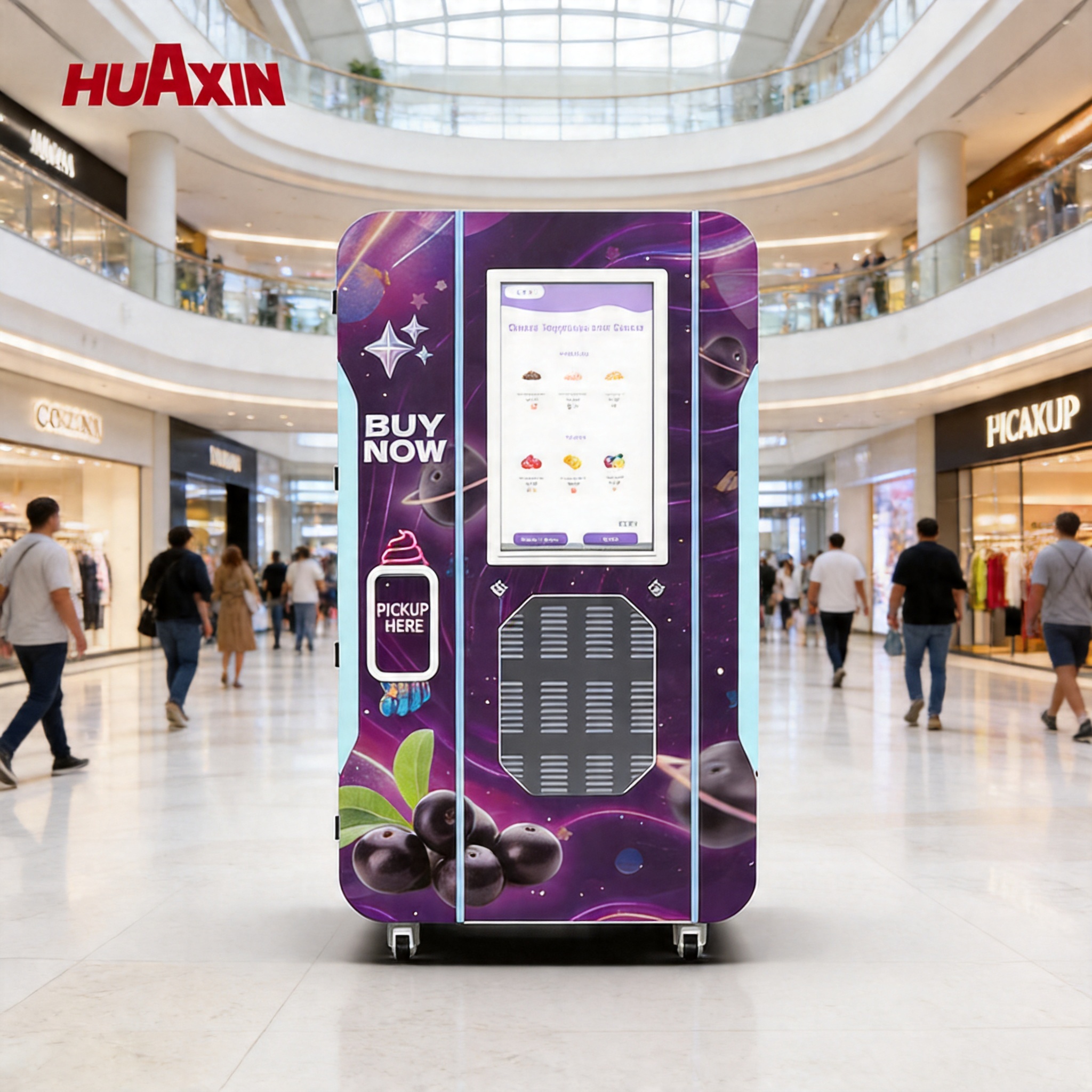
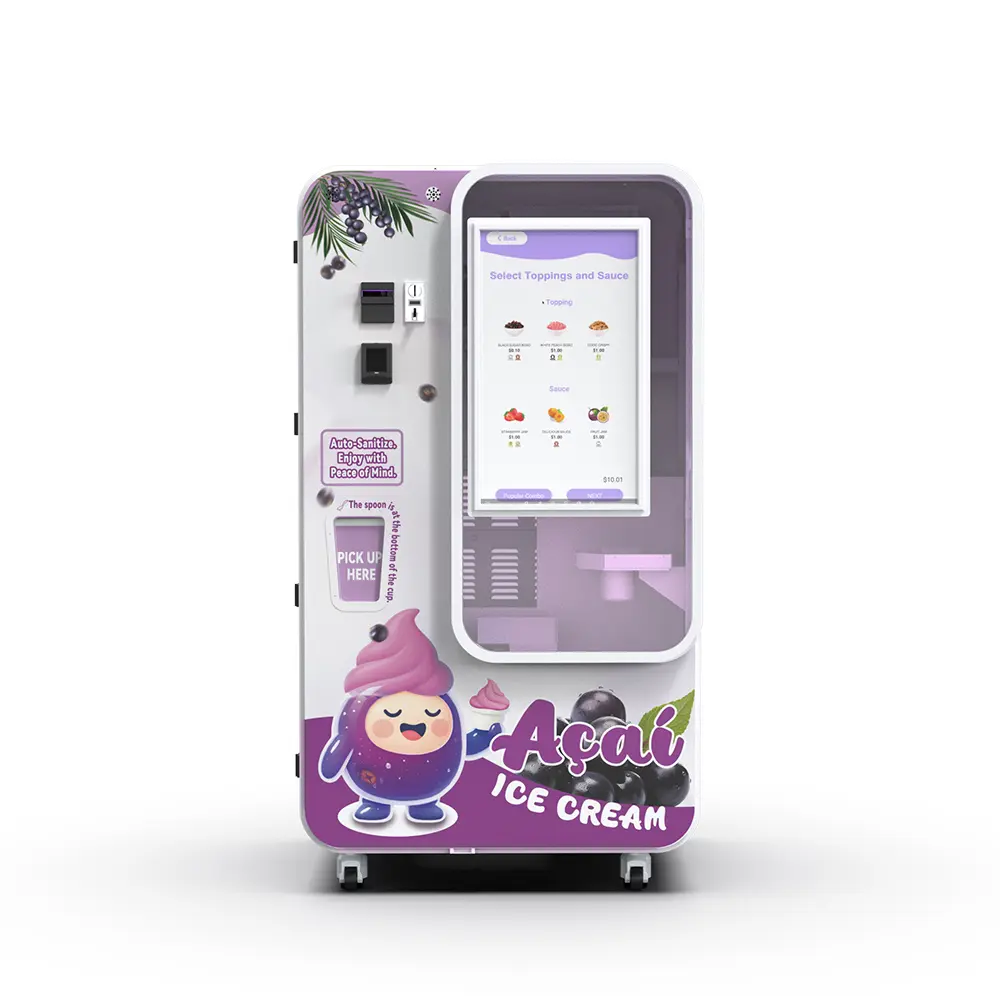
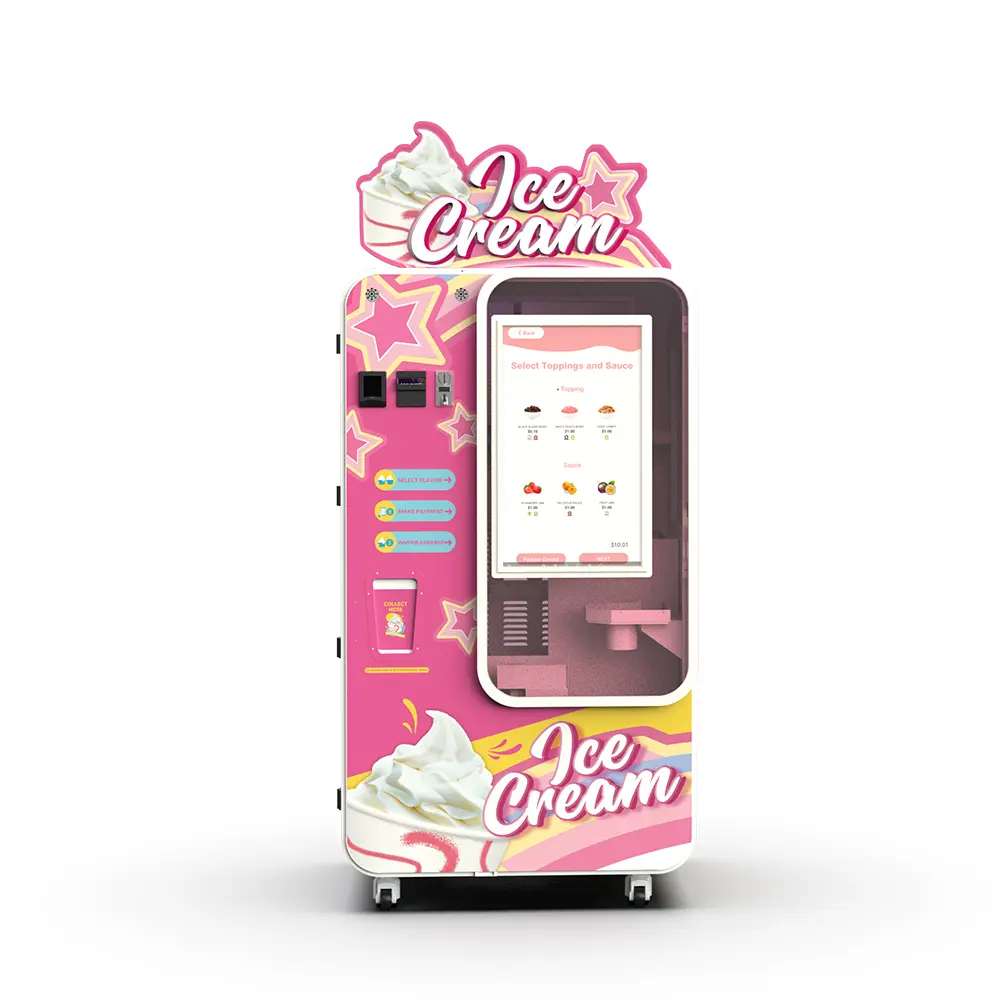
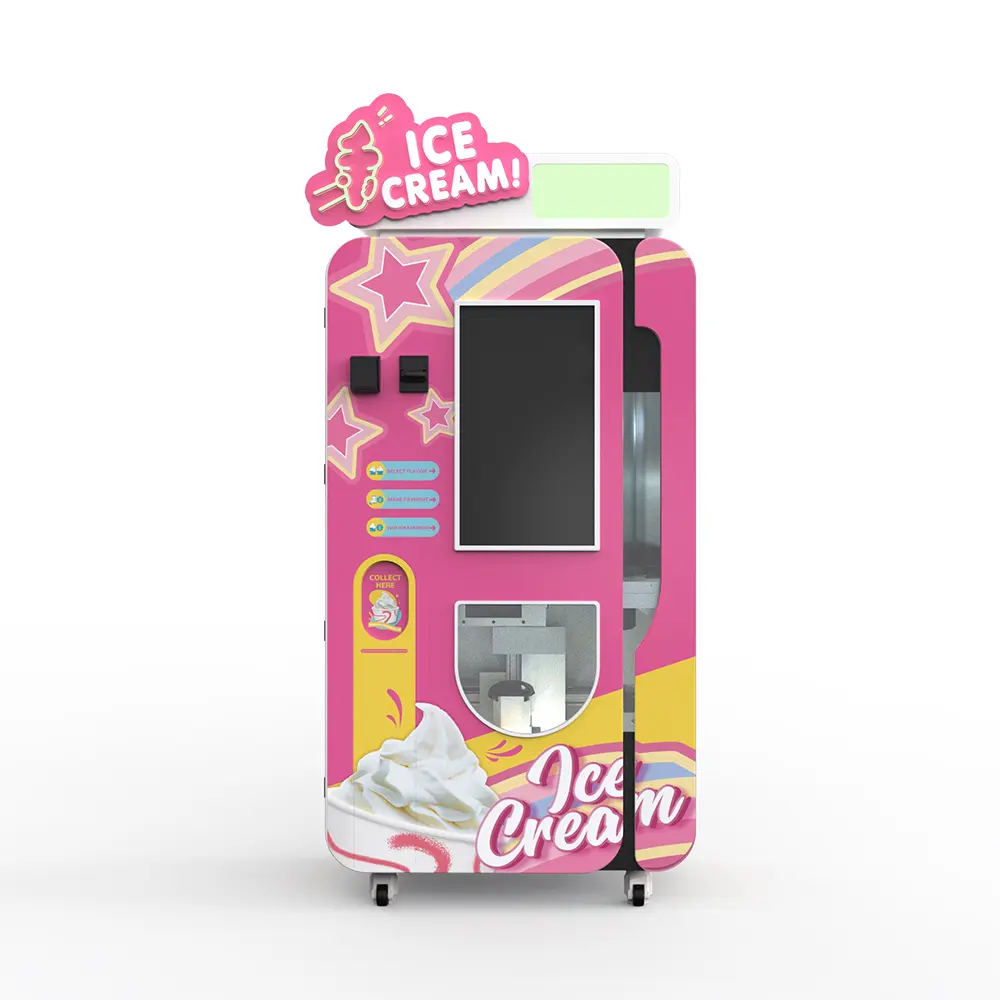
Costo de la máquina expendedora de helados: Máquina, envío, ingredientes y operación
Aprenda el costo real de la máquina expendedora de helados más allá de la máquina en sí. Esta guía detalla la configuración de la máquina, el envío, los ingredientes, los gastos operativos y cómo solicitar una cotización comercial precisa.
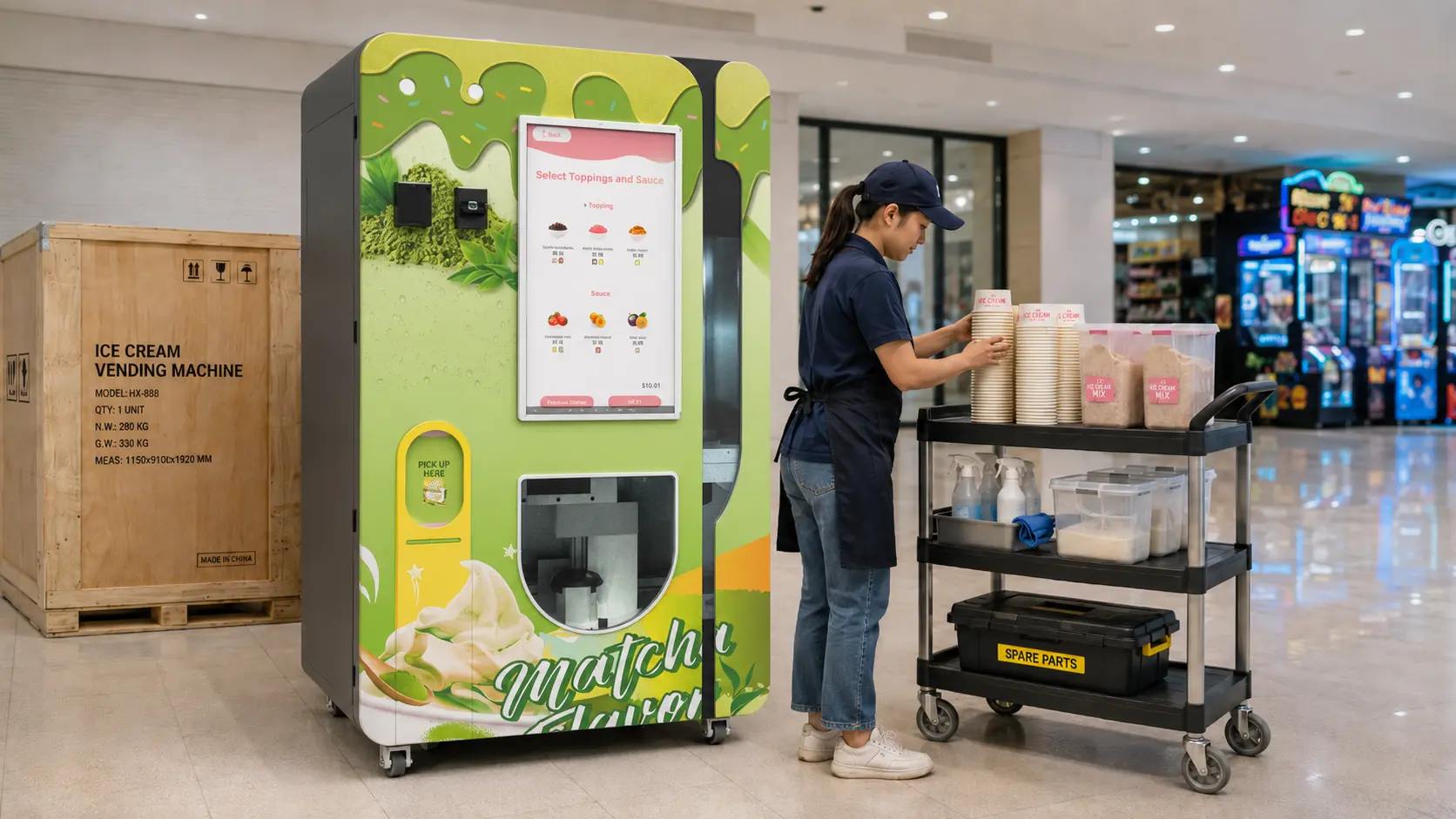
Cuando los compradores preguntan Costo de máquina vending de heladoA menudo, esperan un solo número. Este suele ser el primer error. En la venta comercial, el precio de la máquina es solo una parte del costo total de propiedad. Una cotización que parece baja al principio puede volverse mucho menos atractiva una vez que se agregan el envío, los cargos de importación, los ingredientes, las tazas de papel, los gastos relacionados con el sitio, la integración de pagos, la limpieza y el mantenimiento.
Aquí es donde muchos nuevos proyectos van mal. El comprador compara los precios de dos máquinas, asume que la cotización más baja es el mejor trato, y sólo más tarde se da cuenta de que una máquina incluye una pantalla táctil más grande, refrigeración más fuerte, opciones de pago más adecuadas, mejor capacidad, embalaje de exportación y monitoreo remoto, mientras que la más barata no lo hace.
Para los operadores, distribuidores, inversionistas y compradores de proyectos, la mejor pregunta no es simplemente: "¿Cuánto cuesta la máquina? " La mejor pregunta es: "¿Cuánto costará comprar, enviar, lanzar y operar esta máquina en el mundo real?"
Esta guía divide la respuesta en cuatro partes prácticas:
- Máquina
- Navegación
- Ingredientes
- Operaciones
También explica cómo solicitar una cotización precisa en lugar de recopilar números aleatorios que son imposibles de comparar.
Por qué el precio más bajo de la máquina puede ser engañoso
Una máquina expendedora de helados comercial no es un gabinete estándar con una ranura para monedas. Es una pequeña operación de postres desatendida construida en una sola unidad. Esto significa que la cotización puede reflejar diferencias importantes en:
- Refrigeración y almacenamiento seguro para alimentos
- Hardware de pago
- Calidad touchscreen
- Capacidad de copa e ingrediente
- Nivel de automatización
- Software y monitorización remota
- Embalaje de exportación
- Soporte de piezas de repuesto
- Requisitos de limpieza y mantenimiento
Un precio bajo de la máquina puede excluir elementos clave que importan más tarde. Un precio más alto en realidad puede reducir el riesgo operativo porque la máquina es más fácil de manejar, más adecuada para el mercado objetivo o menos propensa a crear tiempo de inactividad.
En la práctica, los compradores deben pensar en términos de Costo total de propiedad (TCO) más que el precio unitario.
Un marco práctico de costes
| Categoría de costes | Lo que suele cubrir | Por qué importa |
|---|---|---|
| Máquina | Cuerpo del equipo, configuración de hardware, características de automatización | Determina el rendimiento, la capacidad, la usabilidad y la fiabilidad a largo plazo. |
| Navegación | Embalaje, transporte, seguros, aduanas, aranceles, entrega local | Puede cambiar significativamente el costo de aterrizaje final |
| Ingredientes & Consumibles | Mezcla, tazas, cucharas, coberturas, materiales de limpieza | Se requiere antes de que la máquina pueda comenzar a funcionar |
| Operaciones | mano de obra, recarga, limpieza, tarifas del sitio, mantenimiento, tarifas de pago | Determina si la máquina sigue siendo comercialmente viable |
Si un comprador compara sólo la primera línea, el resto del presupuesto del proyecto puede ser fácilmente subestimado.
Parte 1: Costo de la máquina - ¿Qué cambia el precio del equipo?
No todas las máquinas expendedoras automáticas de helados están construidas con el mismo estándar comercial. Algunas diferencias son visibles inmediatamente. Otros sólo se hacen evidentes después de la instalación.
1. Pantalla táctil e interfaz de cliente
La pantalla no es sólo una decoración. Afecta a la facilidad con la que los clientes pueden entender el producto, realizar un pedido y completar el pago.
Una pantalla táctil comercial más grande y bien diseñada puede soportar:
- Menús más claros
- Presentación del producto más fuerte
- Mejor branding
- Instrucciones multilingües
- Uso más fácil por primera vez
- Contenido promocional
Para un centro comercial, centro de entretenimiento familiar o ubicación del aeropuerto, la pantalla táctil tiene un efecto directo en la confianza del cliente. Para un hotel o oficina más pequeño, una interfaz más básica aún puede ser aceptable.
2. Refrigeración y control de temperatura seguro para alimentos
Este es uno de los principales impulsores de costos comerciales. Una máquina que maneja productos blandos, yogur congelado, sorbet o açaí necesita un almacenamiento en frío estable y un rendimiento de producción consistente.
La refrigeración afecta:
- Seguridad de ingredientes
- Textura del producto
- Servir la consistencia
- Rendimiento durante las horas pico
- Frecuencia de mantenimiento
- Equipo de vida útil
Para muchos compradores, aquí es donde "barato" se convierte en caro. Una unidad de bajo costo que no puede mantener un rendimiento estable en un lugar ocupado puede crear desperdicios, quejas de los clientes y pérdidas de ventas.
3. Sistema de pago
La configuración del pago es una importante variable de precios porque diferentes mercados requieren diferentes soluciones.
Dependiendo del país y la ubicación, los compradores pueden necesitar:
- Aceptación de tarjetas bancarias
- NFC o pago sin contacto
- Pago QR
- Integración de billetera local
- Opciones de monedas o billetes
- Integración basada en MDB con un proveedor de pagos local
Una máquina que parece asequible puede no incluir el hardware de pago o la integración necesaria para el mercado objetivo.
4. Capacidad y almacenamiento interno
La capacidad afecta tanto al precio del equipo como a la carga de trabajo operativa diaria. Los compradores deberían preguntar:
- ¿Cuánta mezcla de base puede contener la máquina?
- ¿Cuántas tazas puede almacenar?
- ¿Con qué frecuencia necesitará recarga?
- ¿Es la capacidad adecuada para el tráfico diario esperado?
Una máquina instalada en un centro de entretenimiento familiar ocupado puede necesitar una capacidad más fuerte que una instalada en un hotel u oficina.
5. Nivel de automatización
La frase « máquina expendedora automática de helados » abarca una amplia gama de automatización. Algunas unidades son más automatizadas en el manejo de tazas, el flujo de servicio y el diseño de la recogida que otras.
Una mayor automatización puede mejorar la consistencia y reducir la intervención manual, pero también puede afectar la cotización. El equilibrio adecuado depende del proyecto. Un sitio comercial de alto tráfico a menudo justifica una automatización más fuerte que una ubicación de bajo volumen.
6. Gestión remota
La gestión remota es especialmente importante para los operadores multiubicación. Puede ayudar a controlar:
- Máquina en línea estado
- Nivel de ingredientes
- Datos de ventas
- Alerta de temperatura
- fallas
- Limpieza recordatorios
Para una sola máquina de prueba, la monitorización remota es útil. Para 3, 5 o 20 máquinas, se vuelve operativamente importante.
Configuración vs impacto de precio
| Área de configuración | Bajo costo de instalación | Costo más alto Setup | Quien suele necesitar la configuración más alta |
|---|---|---|---|
| Pantalla | Pantalla básica o más pequeña | Pantalla táctil más grande | Centro comercial, FEC, aeropuerto, venta al por menor de alto tráfico |
| Refrigeración | Refrigeración comercial básica | Control de temperatura estable | Servir suave fresco, yogur congelado, sitios de uso intensivo |
| Pago | Configuración de pago limitada o simple | Múltiplo pago, integración local | Compradores de exportación, ubicaciones comerciales públicas |
| Capacidad | Taza inferior o almacenamiento de mezcla | Mayor almacenamiento y continuidad de servicio | Sitios de tráfico de varias horas |
| Sistema remoto | Mínimo o ninguno | Ventas, alertas, monitoreo | Operadores de múltiples ubicaciones, distribuidores |
Es por eso que una cotización más baja y una mejor cotización no siempre son lo mismo.
Parte 2: Costo de envío - Lo que los compradores a menudo olvidan
Para los compradores internacionales B2B, el envío suele ser el segundo bloque de costos más importante después de la máquina en sí.
Una cotización puede basarse en FOB, CIF u otro término comercial, pero los compradores aún deben comprender la imagen completa.
Elementos presupuestarios típicos relacionados con el transporte marítimo
- Embalaje de madera de exportación o protección de cajas
- Origen Transporte Interior
- Declaración de exportación
- Carga marítima o carga aérea
- Seguro de carga
- Cargos por puerto de destino
- Despacho aduanero
- Impuestos o aranceles de importación
- Entrega local desde el puerto o almacén al sitio
Una razón por la que los compradores subestiman el costo total es que el "envío" a menudo se trata como una sola línea. En realidad, se trata de una cadena de artículos de costo separados.
Datos de referencia de exportación de Huaxin
Para una máquina Huaxin típica de tamaño completo, los compradores pueden utilizar la siguiente referencia de planificación:
- Dimensiones: aproximadamente 1180 × 1100 × 2130 mm
- Peso: Aproximadamente 500 kg
- Volumen: Aproximadamente 2,76 CBM
Planificación de referencia de contenedores:
- 20-Contenedor de pies: Alrededor de 10 máquinas
- 40-Contenedor de cubo alto: Cerca de 22 máquinas
Estos son números útiles de planificación porque la economía del envío cambia significativamente por cantidad:
- 1 Máquina: a menudo mayor costo de flete unitario, especialmente bajo LCL
- 3-5 Máquinas: La eficiencia de la logística compartida comienza a mejorar
- 10 + Máquinas: La planificación basada en contenedores es más eficiente
Por qué el costo de aterrizaje puede variar tanto
La misma máquina enviada a Oriente Medio, Europa, Australia o América Latina no tendrá el mismo costo de aterrizaje. Las diferencias provienen de:
- Distancia de carga y ruta
- Procedimientos de importación
- Cargos de destino
- Régimen de derechos y impuestos
- Distancia de entrega local
- Si el comprador necesita entrega a puerta o entrega a puerto
Es por eso que los compradores serios no deben comparar el precio de la máquina sin preguntar sobre Máquina vending cost landed.
Parte 3: Ingredientes y consumibles - El presupuesto comienza antes del lanzamiento
Muchos compradores por primera vez presupuestan la máquina y el envío, luego olvidan que la máquina no puede comenzar a vender sin stock operativo.
Ingrediente típico y artículos de costo consumibles
- Mezcla base o polvo
- Ingreso de agua o leche dependiendo de la configuración
- Copas de papel
- Spoons
- Topings o ingredientes secos
- Salsa
- productos de limpieza
- Sellos de reemplazo o consumibles de contacto con alimentos
Si la estrategia del producto es solo servir suavemente, el plan de ingredientes puede ser más simple. Si el concepto incluye yogur congelado o un menú orientado a los topping, la estructura de costos de consumo se vuelve más compleja.
Por qué los consumibles importan en la fase de presupuesto
Los consumibles afectan:
- Presupuesto de apertura
- Estrategia de precios
- Rutinas operativas diarias
- Planificación de margen bruto
- Frecuencia de reabastecimiento
Por ejemplo, un menú básico de vainilla por lo general tiene un perfil operativo diferente de un concepto de yogur congelado con opciones de fruta, nueces, granola y salsa.
Los compradores no necesitan calcular un modelo de beneficio perfecto en la etapa de cotización, pero necesitan saber que Soft Serve Vending Machine Precio No es lo mismo que el costo total de instalación comercial.
Tabla de planificación de ingredientes y consumibles
| Item | Una vez o recurrente | Objetivo presupuestario |
|---|---|---|
| Mezcla base / polvo | recurrente | Costo del producto principal |
| Tazas y cucharas | recurrente | Embalaje y servicio |
| Toppings / Salsas | recurrente | Valor del menú y potencial de upsell |
| Agentes de limpieza | recurrente | Seguridad alimentaria y mantenimiento |
| Sello de reemplazo / pequeños consumibles | recurrente | Mantenimiento preventivo |
| Lanzamiento Stock | Compra inicial | Necesitas antes de las primeras ventas |
Un comprador que solicita sólo el precio de la máquina a menudo pierde toda esta capa.
Parte 4: Costo de operación: la parte que decide la viabilidad comercial real
El costo de operación es donde la parte de "propiedad" del costo total de propiedad se convierte en real.
Incluso con una máquina automática, los operadores aún deben planificar:
- Ingredientes de recarga
- Copas de reposición
- limpieza
- Chequeos de rutina
- Mantenimiento menor
- Tarifas de procesamiento de pagos
- Cargos de software o SIM / red si corresponde
- Alquiler de sitio o participación en ingresos
- Trabajo tiempo
La operación no significa personal a tiempo completo
Una ventaja de una máquina automática es que reduce la mano de obra en el sitio en comparación con un quiosco de postres tradicional. Pero el trabajo reducido no es trabajo cero.
Alguien todavía necesita:
- Reponer la máquina
- Verifique la sanidad
- Responder a las alertas
- Manejo de fallas
- Gestión de consumibles
- Revisión de rendimiento
Esto es especialmente importante para los compradores que entran en el negocio por primera vez. Una buena máquina puede reducir la presión del personal, pero no elimina la necesidad de disciplina operativa.
El costo relacionado con el sitio también importa
El tipo de ubicación cambia el costo operativo y las expectativas comerciales.
Un centro comercial puede requerir:
- Mayor calidad de branding
- Mejor configuración de pago
- Apoyo de fin de semana
- Potencial alquiler del centro comercial o participación de ingresos
Una escuela o fábrica puede necesitar:
- lógica de pago más sencilla
- Capacidad moderada
- Patrón de recarga más predecible
Un hotel o gimnasio puede tener menos tráfico, pero diferentes expectativas de los clientes.
Diferencias presupuestarias por tipo de ubicación
| Tipo de localización | Enfoque presupuestario típico | Por qué cambia el costo |
|---|---|---|
| Shopping Mall | Pantalla fuerte, pago, branding, mayor costo del sitio | La calidad del cliente importa más |
| FEC / Lugar temático | Capacidad, velocidad, planificación de recarga | Los picos de fin de semana pueden ser fuertes |
| Hotel | Apariencia premium, funcionamiento silencioso, volumen moderado | Menor tráfico, pero expectativas de calidad |
| Escuela / Campus | Pago más simple, operación estable | Ambiente controlado, tráfico repetido |
| Sitio de gimnasio / bienestar | Posicionamiento del producto, toppings, presentación limpia | El concepto de menú afecta a los consumibles |
Diferencias presupuestarias por cantidad de compra
| Compra cantidad | La lógica presupuestaria principal |
|---|---|
| 1 Máquina | Presupuesto de prueba, envío de unidades más alto, stock de lanzamiento simple |
| 3-5 Máquinas | Mejor eficiencia logística, mayor necesidad de gestión remota |
| 10 + Máquinas | Planificación de contenedores, lógica de distribuidor, planificación de repuestos, valor de capacitación |
Esto es importante porque una primera máquina y un despliegue regional no deben presupuestarse de la misma manera.
Cómo solicitar una cotización exacta en lugar de un número aproximado
Si un comprador simplemente pregunta: "¿Cuál es su mejor precio?" El proveedor sólo puede dar una respuesta aproximada. Una cotización útil requiere información sobre el proyecto.
Lista de verificación de cotización efectiva
Antes de pedir el precio, prepárate:
- País objetivo
- Ciudad o puerto objetivo
- Cantidad de compra esperada
- Tipo de ubicación objetivo
- Tipo de producto: servidor blando, yogur congelado, sorbet o estilo açaí
- Requisitos de pago
- Estimación de ventas diarias
- Tiempo de lanzamiento esperado
- Si se necesita apoyo de transporte
- Si el comprador necesita entrega en puerto o entrega en puerta
Esta es la diferencia entre la recolección de precios y la recolección de cotizaciones utilizables.
Template de solicitud
País:
Ciudad / puerto de destino:
Cantidad esperada:
Tipo de localización: Centro comercial / FEC / Hotel / Escuela / Gimnasio / Otros
Tipo de producto: Servir blando / Yogurt congelado / Sorbet / Estilo Açaí
Ventas diarias esperadas:
Requisitos de pago: Tarjeta / NFC / QR / Moneda / Otros
Estimación de envío: Sí / No
Plazo de entrega preferido: FOB / CIF / Otros
Necesita idioma local o configuración específica del mercado: Sí / No
Tiempo de lanzamiento previsto:
Otros requisitos:
Un proveedor puede dar una mejor configuración y asesoramiento presupuestario cuando esta información está disponible.
FAQs
¿El costo de la máquina expendedora de helados generalmente incluye el envío?
No siempre. Muchos compradores primero solo reciben el precio de la máquina. El envío, el embalaje, los cargos relacionados con aduanas y la entrega local pueden cotizarse por separado dependiendo del término comercial.
¿Qué está incluido en el costo total de propiedad de una máquina expendedora de helados?
Un costo total realista generalmente incluye la máquina, configuración de pago, envío, costo relacionado con la importación, ingredientes, tazas, suministros de limpieza, mano de obra operativa, mantenimiento y gastos relacionados con la ubicación.
¿Cuánto stock de operación debo preparar antes del lanzamiento?
Eso depende del concepto y del tráfico esperado. Como mínimo, los compradores deben preparar la mezcla de base, tazas, cucharas, productos de limpieza y los condimentos o salsas necesarias para el menú planificado.
¿Es más caro una máquina por unidad que comprar varias?
Por lo general sí desde una perspectiva logística. Una sola unidad a menudo conlleva un mayor costo de transporte por máquina, mientras que los pedidos de varias unidades pueden mejorar la eficiencia del envío y apoyar la planificación de contenedores.
¿Cómo puedo obtener una cotización precisa rápidamente?
Proporcione el país, la ciudad o puerto de destino, la cantidad de compra, el tipo de ubicación, los requisitos de pago, el tipo de producto, las ventas diarias objetivo y la fecha prevista de lanzamiento.
¿Debo centrarme más en el precio de la máquina o el costo operativo?
Ambos son importantes, pero el costo operativo es lo que determina si el proyecto sigue siendo manejable después del lanzamiento. Un precio más bajo de la máquina no significa automáticamente un menor costo total de propiedad.
Conclusión
El Real Costo de máquina vending de helado No es solo el precio del equipo. Es el costo combinado de la máquina, el envío, los ingredientes y la operación.
Es por eso que los compradores a menudo son engañados por un número de partida bajo. La máquina puede parecer asequible, pero la configuración comercial real aún depende de la configuración, el transporte, los cargos de importación, los consumibles y las demandas de operación diaria.
Para un operador por primera vez, el enfoque más seguro es presupuestar en cuatro capas:
- Máquina
- Navegación
- Ingredientes
- Operaciones
Para los operadores y distribuidores con múltiples ubicaciones, se aplica la misma lógica, pero con un énfasis aún mayor en la compatibilidad de pagos, la gestión remota, la eficiencia logística y la planificación de recarga.
Si desea un presupuesto realista en lugar de un número aproximado, prepare la información correcta antes de solicitar una cotización: su país, ciudad o puerto objetivo, cantidad esperada, tipo de ubicación, tipo de producto, necesidades de pago, ventas diarias esperadas y tiempo de lanzamiento objetivo.
Esto ayudará a un proveedor a recomendar la configuración comercial correcta en lugar de simplemente enviar el precio más bajo posible de la máquina.
Referencias
-
Administración de Alimentos y Medicamentos de los Estados Unidos (FDA) - Código de Alimentos 2022
-
Asociación Nacional de Merchandising Automático (NAMA) - Multi-Drop Bus / Protocolo de Comunicación Interna
-
Oficina de Estadísticas Laborales de los Estados Unidos (BLS) - Servicio de alimentos y materiales de referencia de costos de ocupación de servicios
-
Materiales de la industria NAMA sobre servicios de conveniencia y operaciones de venta
-
Referencias comerciales y logísticas públicas para la planificación de contenedores y términos de envío internacional
References / Sources